What Is Automated Trading? How EA, Trading Bots, and Quantitative Trading Differ
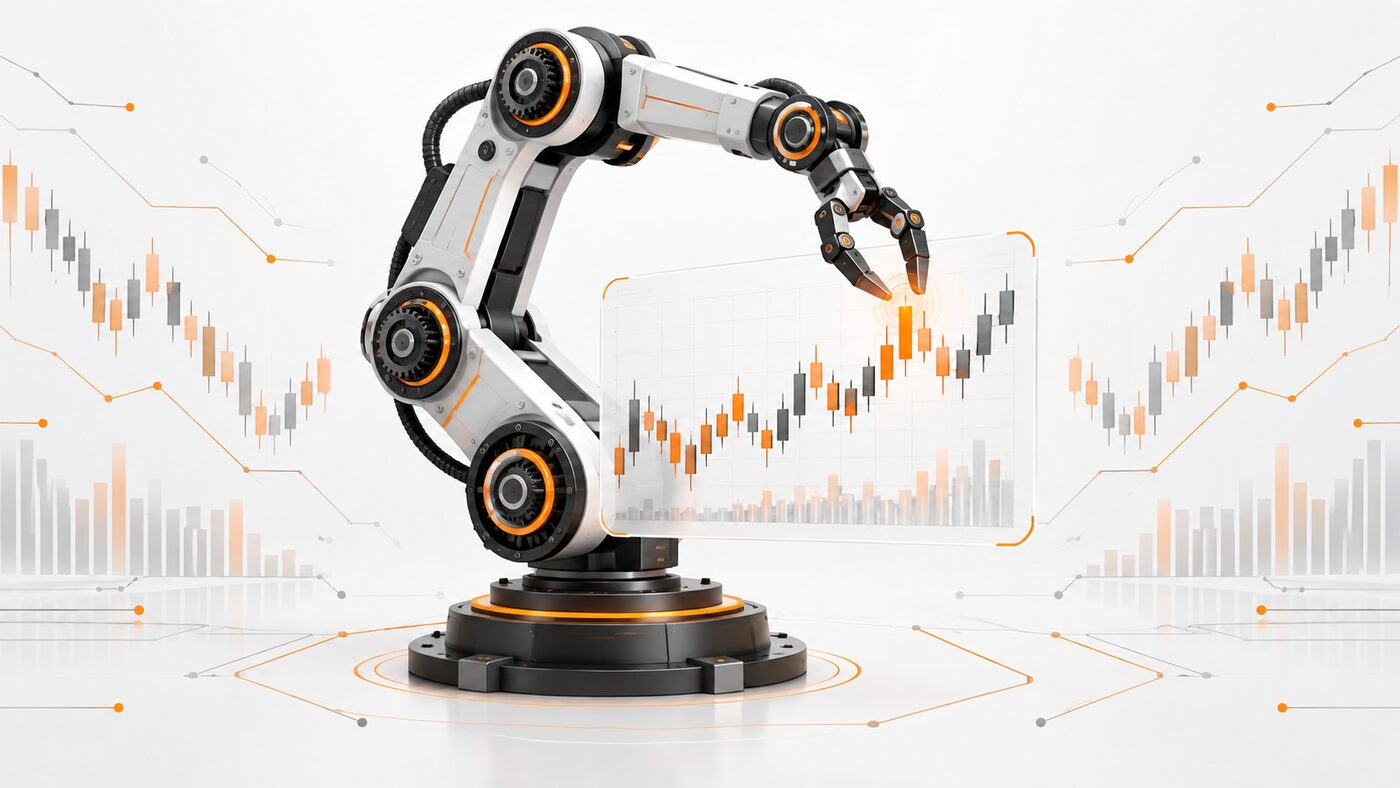
Automated trading is one of the most talked-about ways to trade in today’s financial markets.
Many traders run into EAs, trading bots, and quantitative trading early on, and it’s easy to blur the lines between them.
This article walks through how automated trading actually works, and how EAs, trading bots, and quantitative trading relate to one another.
Have you ever wondered:
What if trading could just happen automatically?
For example:
Trading while you sleep
Trading while you’re at work
Not having to watch the screen all day
Not being pulled around by your own emotions
That’s exactly why so many people start looking into automated trading.
After all, most traders have lived through this at least once:
You call the direction correctly
↓
You hesitate to enter
↓
The move happens without you
Or the opposite:
You enter the trade
↓
Fear kicks in
↓
You exit early
↓
…and that’s exactly when the move finally takes off
So people start asking:
Is there a way to let a system execute this for me?
That question is exactly where automated trading comes from.
Imagine two traders.
Trader One
Watches the charts every day, on their own.
Analyses on their own.
Places every order on their own.
Watch the market
↓
Judge the setup
↓
Place the order
↓
Manage the position
Trader Two
Defines the rules up front:
20MA > 60MA
↓
Buy
20MA < 60MA
↓
Sell
…and then hands execution to a system.
Rules
↓
System evaluates
↓
System places the order
↓
System manages the position
The biggest difference between the two?
Trader One relies on a person.
Trader Two relies on a system.
So is Trader Two doing quantitative trading?
Not necessarily.
Because:
Automated trading is just a way of executing.
Quantitative trading is a decision-making method.
A lot of people treat the two as the same thing.
They’re actually not.
What is automated trading?
Automated trading means a computer system executes your trading orders for you.
The system follows rules that were set in advance:
Entries
Exits
Stop-loss
Take-profit
Money management
All of it runs automatically.
No manual intervention required.
What is an EA in automated trading?
An EA (Expert Advisor) is an automated trading program built for the MT4 and MT5 platforms.
Think of an EA as a trading robot installed inside MT5.
For example:
Gold breaks above a prior high
↓
The EA buys automatically
Price breaks below the stop-loss level
↓
The EA exits automatically
An EA on its own says nothing about whether a strategy is good.
It’s just the tool that executes it.
The same way that:
Excel
≠ a good financial model
Photoshop
≠ good design work
By the same logic:
An EA
≠ a good trading strategy
What is a trading bot?
“Trading bot” is actually a much broader term.
Any program that can execute trades automatically can be called a trading bot, including:
MT5 EAs
Python-based automated trading programs
API-driven trading systems
High-frequency trading systems
All of these fall under the “trading bot” umbrella.
Automated trading vs. quantitative trading
Quantitative trading is fundamentally about how decisions get made.
Questions like:
When do I buy?
When do I sell?
How much risk am I taking?
How is capital allocated?
All of that falls under quantitative trading.
How the three relate to each other
The easiest way to think about it:
Quantitative trading = the decision-making system
EA = the execution tool
Automated trading = the way it gets executed
One picture to make it click
Quantitative strategy
↓
EA / trading bot
↓
Automated trading
↓
Live execution
Why do so many EAs end up failing?
Because most people only buy the tool.
They never actually understand the strategy behind it.
For example:
See an ad
↓
Buy an EA
↓
Go straight to live trading
↓
Lose money
↓
Move on to the next EA
That’s really just gambling on luck.
It isn’t quantitative trading.
So what actually matters?
What actually matters is the logic behind the strategy.
Things like:
Trend following
Mean reversion
Breakout trading
Risk management, including:
Risk per trade
Maximum drawdown
Position sizing
Backtest validation covering:
Win rate
Return
Maximum drawdown
Risk-to-reward ratio
Without validation, even the best-built bot is just automatically executing bad decisions, very consistently.
AI is changing automated trading
In the past:
Learn to code
↓
Write the EA
↓
Debug it
↓
Backtest it
↓
Deploy it
Now:
Describe what you need
↓
AI generates the strategy
↓
AI runs the backtest
↓
An executable file is generated
↓
Deploy it to MT5
A trader’s job is gradually shifting.
From:
Writing the code yourself
To:
Designing the strategy and managing the risk
Advantages of automated trading
Not swayed by emotion
A system doesn’t feel fear.
It doesn’t get greedy either.
Can run 24 hours a day
Especially useful in:
Forex markets
CFD markets
Crypto markets
Repeatable
Same conditions.
Same results.
Easy to keep improving over time.
Disadvantages of automated trading
A strategy can stop working
Markets change.
A strategy’s edge can fade along with them.
Overfitting to the backtest
Past performance doesn’t guarantee future results.
Technical risk
For example:
VPS goes down
Internet connection drops
API errors
Platform updates
Quick check
Q1. What is an EA?
A. A trading strategy
B. A program that executes a strategy
C. A broker
D. A technical indicator
Q2. What’s the main function of automated trading?
A. Predicting the market
B. Guaranteeing profit
C. Automatically executing trading rules
D. Raising your win rate
Q3. What’s the biggest difference between quantitative trading and automated trading?
A. There isn’t one
B. Quantitative trading is a decision-making method; automated trading is a way of executing it
C. Automated trading is more advanced
D. Quantitative trading must always be done manually
Answers
Q1. ✅ B
Q2. ✅ C
Q3. ✅ B
Conclusion
A lot of people assume that buying an EA is the same as owning a full quantitative trading system.
In reality:
An EA is a tool.
Automated trading is a way of executing.
Quantitative trading is a complete process of decision-making and risk management.
What actually holds long-term value isn’t any particular bot.
It’s whether you understand:
The logic behind the strategy
The backtest results
Risk management
The execution process
Once those pieces come together, automated trading truly becomes part of a real quantitative trading system.
Risk disclosure: CFDs are high-risk financial products that can lead to rapid loss of capital. Past performance does not guarantee future results. All strategies and backtests are for reference only and do not constitute investment advice. Please read our Risk Disclosure carefully before trading.
Further reading: from trading rules to automated execution
Now that you understand how EAs, automated trading, and quantitative trading differ, here’s where to go next — from the core concept, to strategy generation, to real deployment:
What Is Quantitative Trading? — understand the rules, data, and backtesting behind automated execution.
Do You Need to Know How to Code for Quantitative Trading? — see how AI and visual tools are lowering the barrier to strategy development.
The MASQuant × MT5 Beginner’s Guide — go from a strategy idea, through backtesting, to a live MT5 deployment.
Comment
How Much Is 1 Lot? Forex = 100,000 Units, Gold Often 100 oz
October 16, 2026[…] Further reading: What Is Automated Trading? How EA, Trading Bots, and Quantitative Trading Differ […]